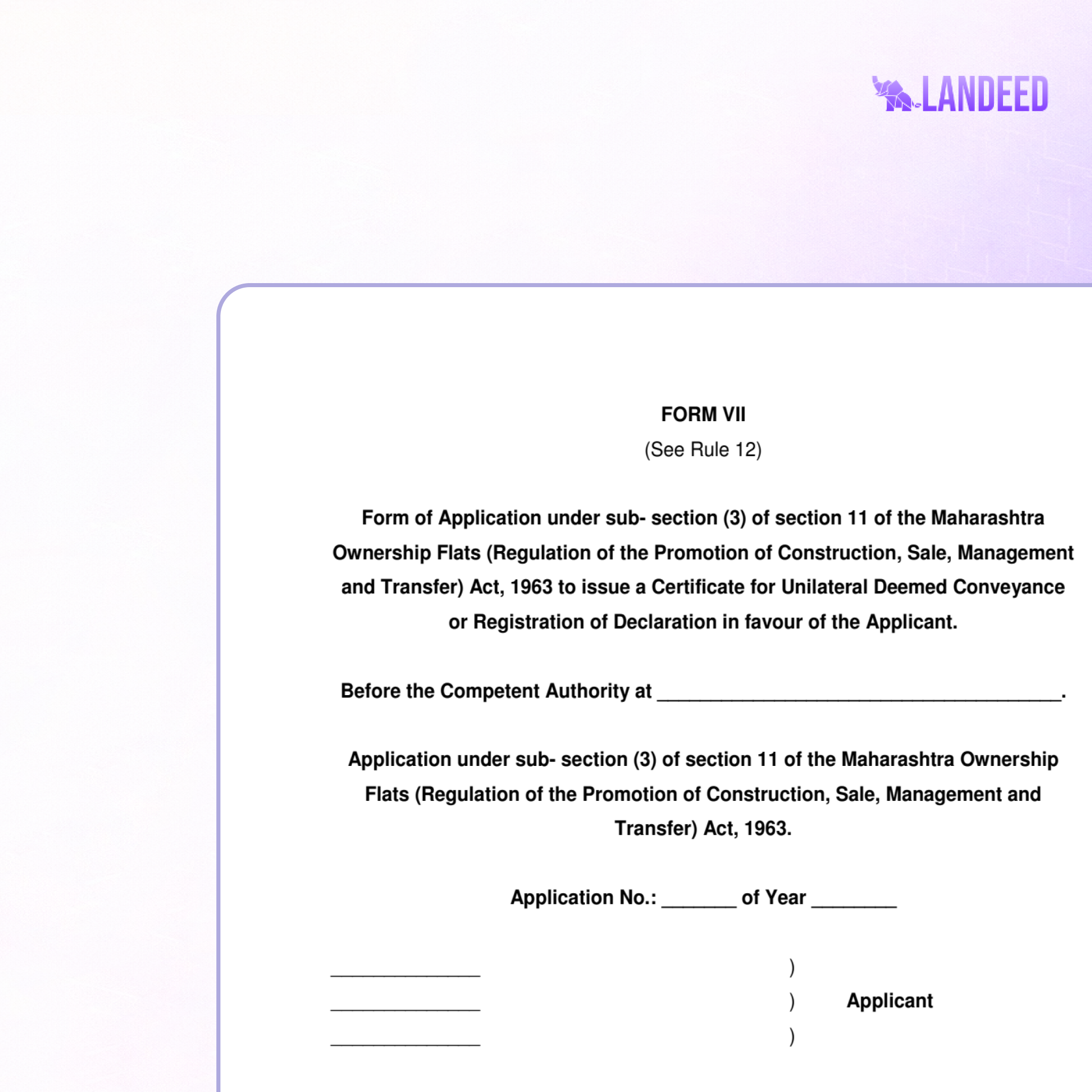
In Mumbai, owning a flat is rarely the end of the ownership story. Most apartment buyers become members of a cooperative housing society, where individual flats are registered, but the land and building are meant to be transferred to the society itself. This final transfer — known as conveyance — is what completes the ownership structure. In many cases, that transfer never happened.
Deemed Conveyance exists to bridge this gap. It allows housing societies to formally receive ownership of the land and building through a competent authority, even when the developer has not executed a conveyance deed.
What Deemed Conveyance Really Means
At its core, Deemed Conveyance is about recognition.
Think of it as the final signature on a transaction you've already completed. You've paid for your flat. You've formed your society. Deemed conveyance completes the circle—putting legal ownership where it belongs: with the people who live there.
When a society applies for Deemed Conveyance, it presents its records — formation documents, property details, and historical agreements — to the designated authority. After review, the authority issues an official order transferring the title of the land and building to the society.
This order carries the same legal weight as a registered conveyance deed. The difference lies only in the route taken, not the outcome achieved.
Why Deemed Conveyance Matters in Mumbai Housing Societies
Deemed Conveyance enables societies to move forward with clarity. It strengthens their legal standing, simplifies future approvals, and provides a solid foundation for long-term planning, including redevelopment. Most importantly, it brings alignment between how societies function in practice and how they are recognised on record.
Complete Authority Over Redevelopment
Your society gains full decision-making power for structural changes, renovations, and redevelopment projects. No developer approval required. No external permissions needed for internal decisions.
Simplified Property Transactions
Clear title makes buying, selling, and financing smoother. Banks prefer lending against properties where societies hold conveyance deeds. Buyers value ownership certainty.
Asset Value Recognition
Your building becomes a fully owned asset. This strengthens your balance sheet and creates pathways for future value creation through redevelopment or structural improvements.
Operational Independence
From utility connections to major repairs, your society operates with complete autonomy. Decisions move faster. Implementation becomes clearer.
Who Can Apply for Deemed Conveyance in Mumbai?
Any registered cooperative housing society in Mumbai qualifies if:
- Your society is registered under the Maharashtra Co-operative Societies Act
- The developer has not executed a conveyance deed
- Your building's Occupation Certificate has been issued
The developer's cooperation is not required. The competent authority can process your application independently.
Step by Step Process for Deemed Conveyance
Step 1: Document Assembly
Gather your society registration certificate, member share certificates, building plan approvals, Occupation Certificate, and title search report.
Step 2: Member Consent
Pass a resolution in your society's General Body Meeting authorizing the deemed conveyance application. Two-thirds of members must approve.
Step 3: Application Submission
File your application with the competent authority (Deputy Registrar or Assistant Registrar of Co-operative Societies) in your jurisdiction.
Step 4: Notice Publication
The authority publishes a public notice inviting objections. This runs for 60 days.
Step 5: Objection Review
Any objections are reviewed. Most procedural concerns get resolved through document clarification.
Step 6: Conveyance Order
Once cleared, the authority issues a conveyance order directing the Sub-Registrar to register the deemed conveyance deed.
Step 7: Registration
Pay stamp duty (3% of ready reckoner rate for the land portion) and register the deed. Your society now legally owns the property.
Timeline: 8-12 months on average, depending on document readiness and objection processing.
Required Documents for Deemed Conveyance
Society Documents:
- Society registration certificate
- Member share certificates
- Society bylaws and rules
- General Body resolution authorizing application
Property Documents:
- Approved building plans
- Occupation Certificate
- Title search report for the property
- Property card and index II
Clearances:
- NOC from MHADA (if applicable)
- NOC from Municipal Corporation
- Property tax receipts (current and cleared)
- Building completion certificate
Additional:
- Survey plan and demarcation documents
- List of all society members with flat details
- Affidavit stating developer has not executed conveyance
Landeed provides a complete checklist and verifies every document before submission.
Common Questions About Deemed Conveyance
What if the developer objects?
Developer objections are reviewed, but most procedural issues can be resolved through proper documentation. The law is designed to enable societies to obtain conveyance even with developer resistance.
Can we apply if the developer is untraceable?
Yes. The process works precisely because it doesn't require developer participation. The competent authority can proceed independently.
What about stamp duty costs?
Stamp duty is calculated at 3% of the ready reckoner rate for the land portion only (not the building value). This is typically lower than market rates since ready reckoner values are conservative.
Does every member need to participate?
You need two-thirds majority approval in your General Body Meeting. Not every member must actively participate in documentation, but the resolution must pass democratically.
What happens after we get the deed?
Your society becomes the legal owner. You can now make independent decisions on redevelopment, structural changes, and building management. The deed goes into your society's permanent records.
Activate Complete Ownership
Deemed conveyance isn't just a legal formality—it's the final step to full ownership clarity.
Your society. Your building. Your land. Your control.
How Landeed Simplifies Deemed Conveyance
Assisted Documentation
We collect, verify, and organize every required document—ensuring completeness before submission.
Application Management
Our team drafts your application, coordinates with authorities, and handles all procedural requirements.
Authority Liaison
We manage communication with the competent authority (Deputy Registrar or Assistant Registrar of Co-operative Societies), Sub-Registrar, and municipal departments on your behalf.
Objection Handling
If objections arise, we work with legal experts to prepare responses and supporting documentation.
Registration Support
We guide you through stamp duty payment and final deed registration—ensuring nothing gets missed.